






Beyond the Camera: How Modern AI-Driven Video Surveillance Can Provide Business Insights
For years, business owners viewed surveillance cameras as little more than digital witnesses. Their role was straightforward: record incidents, deter theft, and provide evidence if something went wrong. In other words, cameras existed to help “catch the bad guy.”
That mindset is rapidly changing.
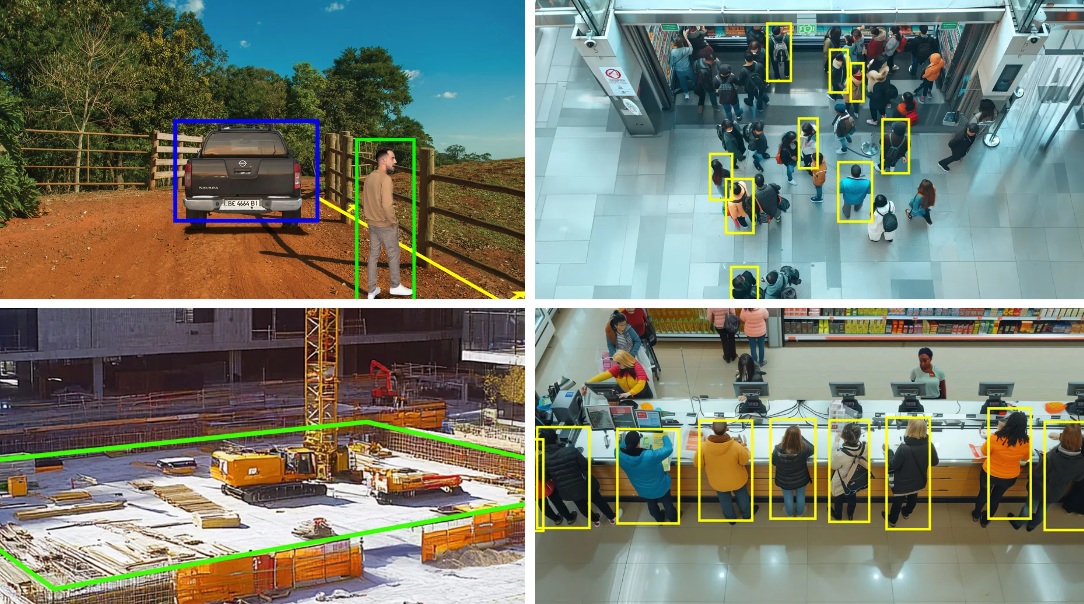
Today’s AI-driven video surveillance platforms are evolving into sophisticated business intelligence tools capable of delivering operational insights that were once only available through expensive consultants, dedicated analytics software, or extensive manual tracking.
Modern systems from companies like Verkada and Provision-ISR are helping businesses move beyond reactive security and into proactive decision-making. Cameras are no longer just passive recording devices. They are becoming intelligent sensors that can help organizations understand customer behaviour, improve staffing efficiency, optimize layouts, identify bottlenecks, and uncover patterns that directly affect revenue.
For Canadian businesses navigating inflation pressures, staffing shortages, rising operational costs, and increased customer expectations, this shift could not come at a better time.
Security Is No Longer the Only Objective
Traditional CCTV systems were designed around one core purpose: recording footage after an incident occurred.
If there was a break-in, theft, workplace incident, or liability concern, management would review hours of video hoping to find useful evidence.
AI-powered platforms have fundamentally changed that workflow.
Instead of simply storing footage, modern systems can actively interpret what is happening within a space in real time. Using computer vision and machine learning, these systems can identify movement patterns, occupancy trends, vehicle activity, customer flow, and operational anomalies.
This means the same camera that protects your business overnight can also help improve sales performance during the day.
Retailers, warehouses, healthcare clinics, manufacturing facilities, property managers, and educational institutions are all beginning to realize that surveillance infrastructure can generate measurable operational value beyond security alone.
The Rise of Foot Traffic Analytics
One of the most practical applications of AI-driven surveillance is foot traffic analysis.
For brick-and-mortar businesses, understanding how customers move through a location has become increasingly important in a competitive retail environment.
AI-enabled cameras can provide insights such as:
- Peak customer arrival times
- High-traffic zones within a facility
- Areas customers consistently avoid
- Average dwell time in specific departments
- Queue formation and congestion points
- Repeat visitation patterns
- Staff-to-customer ratios during busy periods
These insights help businesses make smarter operational decisions.
For example, if analytics show that customer traffic spikes every weekday between 11:30 AM and 1:00 PM, management can adjust staffing schedules accordingly. If certain aisles consistently receive low engagement, merchandising layouts can be reconfigured.
Retail analytics platforms are increasingly being adopted because businesses recognize that physical stores now need the same level of behavioural insight that e-commerce companies have enjoyed for years. Recent retail industry reporting highlights how AI and analytics are helping organizations personalize customer experiences and improve operational efficiency through better traffic analysis and store optimization.
Canadian retailers are also paying closer attention to foot traffic trends as consumer behaviour continues to shift. Colliers Canada recently reported growing interest in mobility and visit-pattern analytics as retailers seek better visibility into store performance and regional shopping trends.
From Cameras to Operational Intelligence
What makes modern surveillance systems especially powerful is their ability to centralize multiple layers of operational data.
This is where platforms like Verkada are gaining attention.
Verkada’s cloud-managed security ecosystem combines video surveillance, access control, environmental sensors, alarms, and analytics into a single platform. Beyond security monitoring, Verkada’s analytics capabilities allow businesses to examine occupancy trends, customer behaviour, and multi-site operational performance.
For businesses operating multiple locations across Ontario or throughout Canada, this creates opportunities to compare performance between sites and identify patterns that would otherwise remain hidden.
Imagine a retailer with locations in Toronto, Mississauga, and Vaughan. AI-driven analytics could reveal that one store consistently experiences longer wait times during lunch hours while another sees higher weekend conversion rates. That information can directly influence staffing models, promotional scheduling, and even future real estate decisions.
Similarly, Provision-ISR has developed advanced surveillance and AI analytics solutions that support a wide range of business environments, including retail, logistics, commercial property, and industrial operations.
The evolution of these systems reflects a broader trend in the industry: surveillance is becoming a source of actionable operational intelligence.
Smarter Staffing and Resource Allocation
Labour remains one of the largest operational expenses for most businesses.
Yet many organizations still rely on intuition or historical assumptions when building staffing schedules.
AI-driven surveillance changes that.
By tracking occupancy patterns and customer flow over time, businesses can align staffing levels more accurately with real-world demand.
This can help:
- Reduce overstaffing during slow periods
- Improve customer service during peak traffic windows
- Minimize employee burnout
- Improve response times in customer-facing environments
- Optimize security personnel deployment
For example, a warehouse operation could identify recurring loading dock congestion during specific delivery windows. A property management company could determine when lobby traffic is highest and adjust concierge staffing accordingly.
Healthcare clinics can use occupancy insights to better understand patient wait times and reception bottlenecks. Manufacturers can monitor workflow movement patterns to improve safety and operational efficiency.
These are not hypothetical use cases anymore. AI video analytics are actively helping organizations bridge the gap between physical operations and measurable business intelligence.
Improving Customer Experience Without Increasing Overhead
One of the biggest challenges facing businesses today is balancing customer expectations with rising operating costs.
Consumers expect faster service, shorter wait times, cleaner facilities, and seamless experiences.
AI-driven surveillance can help organizations improve customer experience without dramatically increasing overhead.
For instance, if analytics reveal that checkout queues regularly exceed acceptable wait times after 5 PM, businesses can proactively open additional registers before complaints arise.
If customer movement data shows that visitors rarely engage with a promotional display, marketing teams can redesign the layout to improve visibility.
This approach mirrors the data-driven decision-making long used in e-commerce.
Online retailers have spent years tracking clicks, dwell times, abandoned carts, and customer journeys. AI-powered surveillance is now bringing similar behavioural intelligence into physical environments.
Industry analysts increasingly describe this as the merging of digital intelligence with physical retail operations, helping businesses create more responsive and personalized in-store experiences.
Privacy Matters and Businesses Must Handle AI Responsibly
As AI surveillance capabilities become more advanced, privacy concerns naturally become part of the conversation.
Businesses must ensure that any video analytics deployment complies with Canadian privacy regulations and industry best practices.
Responsible implementation matters.
Modern enterprise platforms increasingly focus on anonymized analytics rather than intrusive identification. Many systems are designed to analyze movement patterns and occupancy data without relying on facial recognition or personally identifiable information.
Transparency is also essential. Organizations should clearly communicate surveillance practices, maintain proper data governance policies, and work with trusted technology partners that prioritize cybersecurity and compliance.
This is particularly important as regulators continue examining how AI and video analytics intersect with consumer privacy expectations.
The businesses that succeed with AI-powered surveillance will be the ones that balance operational intelligence with responsible implementation.
AI Surveillance Is Becoming a Competitive Advantage
The reality is simple: businesses that understand their physical environments better tend to operate more efficiently.
That is why AI-driven surveillance is quickly moving from a security expense to a strategic business asset.
The ability to gather real-world operational intelligence from existing camera infrastructure creates a compelling return on investment.
Instead of deploying separate systems for:
- Security monitoring
- Occupancy counting
- Traffic analysis
- Operational analytics
- Queue management
- Site monitoring
Businesses can increasingly consolidate these capabilities into a single intelligent platform.
This is especially valuable for organizations managing multiple locations, distributed teams, or customer-facing operations.
As AI technology continues to mature, we can expect surveillance platforms to become even more predictive.
Future systems may help businesses anticipate customer surges, forecast operational risks, identify inefficiencies automatically, and generate actionable recommendations in real time.
For Canadian businesses competing in increasingly data-driven markets, that kind of visibility could become a major differentiator.
Final Thoughts
Modern surveillance cameras are no longer just watching.
They are measuring, analysing, and helping businesses make smarter decisions.
Platforms like Verkada and Provision-ISR are demonstrating how AI-driven video surveillance can evolve from a reactive security tool into a proactive operational intelligence platform.
The businesses that embrace this shift will gain more than better security footage. They will gain deeper visibility into how their organizations actually function.
And in today’s competitive environment, understanding customer behaviour, operational flow, and business patterns in real time may be just as valuable as stopping “the bad guy”.
Ready to explore IP surveillance for your business? Contact our team to talk to an expert.
Contact Us
Empire Team Security Solutions
Enhance Your Business with Expert Security Solutions
Cambridge:
Phone: +1 (888) 330-6775
Email: sales@ecitech.ca
Web: https://www.ecitech.ca
Windsor:
Phone: +1 (888) 618-8847
Email: sales@empire-team.com
Web: https://www.empire-team.com
Serving clients across Canada and beyond